A Adam Arafat. WA-10 Congress
← Watchtower

Tacoma Public Schools Budget Pressure: The McCleary, Levy-Cap, and IDEA Funding Gap.

Tacoma Public Schools budget pressure is a real public issue, but this story is a funding-accountability explainer. The safe framing is education funding pressure and public-budget accountability, not sensitive family, donor, or intent claims.

Last build: 2026-08-02 Sources cited: 6 Graded claims: 3
info@arafatforcongress.org About
Short Tacoma Public Schools Budget Pressure: The McCleary, Levy-Cap, and IDEA Funding Gap. 05:03
Listen options
Transcript Download
TLDR

Tacoma Public Schools eliminated positions and faces more cuts, but Watchtower is holding promotion until the current TPS, OSPI, and federal funding receipts are upgraded.

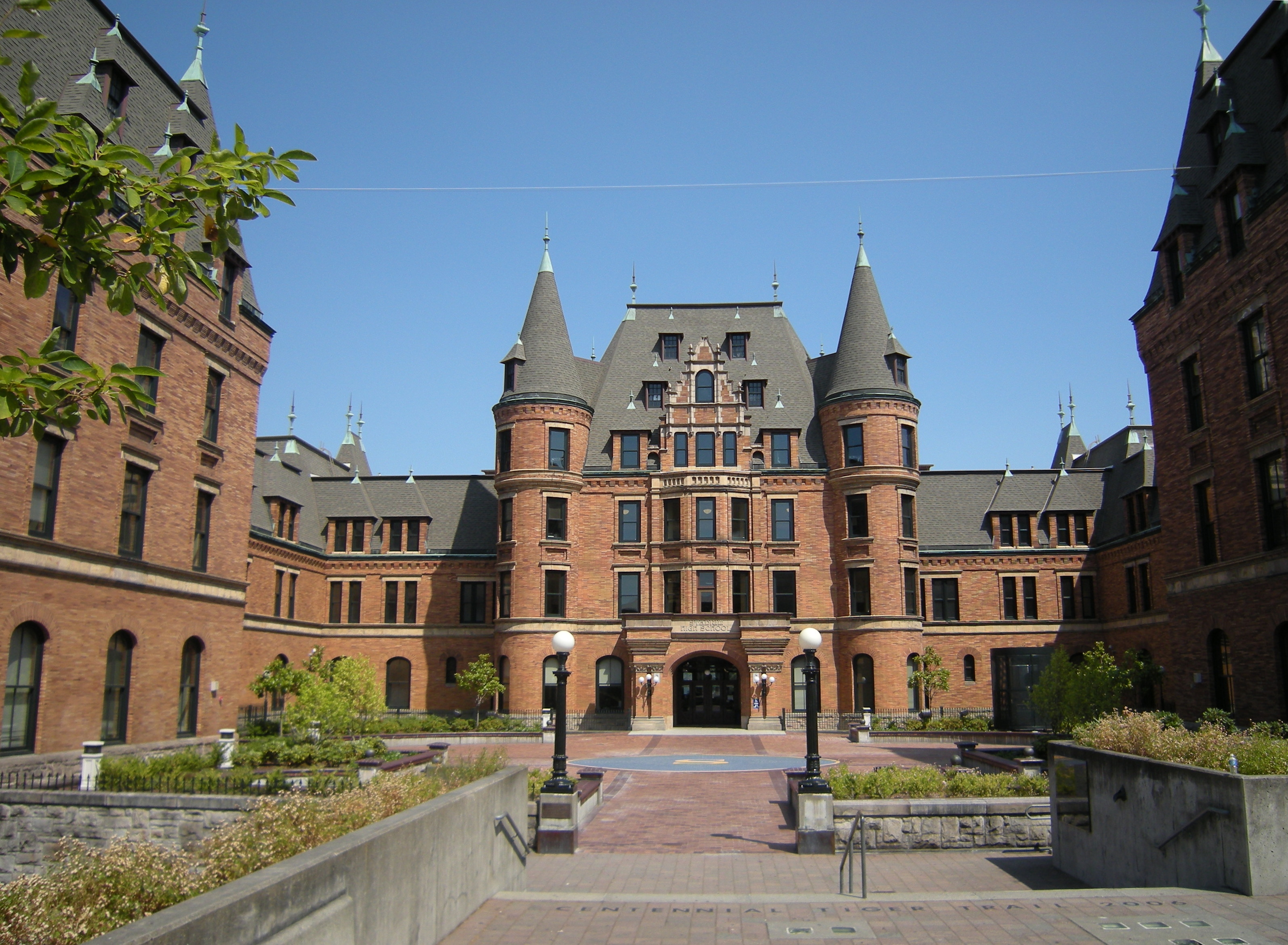
Stadium High School in Tacoma, photographed from the courtyard

Tacoma Public Schools, Washington's third-largest district, serving approximately 28,000 students, declared a financial emergency in early 2024, per TPS budget documents. Its general fund reserves are depleted. The structural deficit between what the district costs to run and what it receives reached approximately $40 million for the 2024-25 school year.

To address the deficit, the district eliminated 38 administrative positions and identified $9.5 million in reductions to its overall staffing budget, according to the district's published budget FAQ. Further cuts are under discussion for FY2026. Source: tacomaschools.org/departments/businessandfinance/budget/frequently-asked-questions

This story should be read as a funding-accountability explainer until the current TPS and OSPI packet is attached. The documented question is how Washington and federal funding formulas affect local classrooms.

The McCleary Ruling and What It Actually Changed

In 2012, the Washington State Supreme Court ruled in McCleary v. State of Washington that the state was failing its constitutional duty to amply fund basic education. The ruling set off years of legislative response. In 2017, the Legislature passed a sweeping education funding reform package designed to fix the problem.

Part of that reform was a "levy swap": the state would increase its per-student funding allocation, and in exchange, local school districts would be capped in how much they could raise through voter-approved property tax levies. The idea was that districts that had been supplementing state underfunding with local levies would no longer need to, because the state money would cover it.

For Tacoma, the levy cap cut local revenue authority from approximately $70 million per year to approximately $38 million, a $32 million reduction, per OSPI and TPS budget documents. The state funding increase was supposed to offset that.

It didn't. The new state formula calculates allocations based on statewide average costs. Tacoma's students cost more to educate than average: the district qualifies for the federal Community Eligibility Provision, which provides universal free meals to all students based on high concentrated poverty, and it has a high proportion of English language learners and students experiencing homelessness. The cost of serving that population is above the state's funding model baseline.

The result is a structural gap that reached $40 million for the 2024-25 school year, per TPS budget documents, which the district has been filling by drawing down reserves. The reserves are now gone.

The Federal Promise That's Been Broken Since 1975

When Congress passed the Education for All Handicapped Children Act in 1975, later reauthorized as the Individuals with Disabilities Education Act, it committed to paying up to 40 percent of the national average per-pupil expenditure for students served under the law. Source: IDEA, 20 U.S.C. Chapter 33. That number was not aspirational. It was written into the statute.

It has never been reached. In recent federal budget cycles, IDEA Part B grants to states have covered approximately 13 to 14 percent of the per-pupil cost, less than a third of the statutory commitment, per CRS and NEA IDEA funding analyses. For Tacoma, with a higher-than-average proportion of students with identified disabilities, English language learners, and students experiencing homelessness, the federal shortfall translates directly into positions that cannot be funded, services that cannot be delivered, and class sizes that cannot be controlled.

Tacoma's structural deficit, which reached $40 million in 2024-25, is not a local management failure, per TPS budget documents. It is the accumulated result of a state formula that was designed assuming federal partnership and a federal partner that has not delivered at the statutory level. The levy swap that cut TPS's local revenue authority was built on the assumption that state and federal funding would be adequate. The state underfunded. The federal government underfunded. The district absorbed the gap until the reserves were gone.

A representative for WA-10 can use every appropriations cycle to push IDEA funding toward its statutory target. The ask is not new policy: it is Congress keeping a fifty-year-old promise it made when it decided that educating students with disabilities was a federal responsibility. That decision was made. The funding commitment was written into law. The money was not sent.

Receipts

Methodology & Sources Open source record checks, assumptions, and ratings Open

Watchtower applies open-source forensic doctrine to every Ready story. Sources are graded; competing explanations are tested; the assumption that could break the story is named; what would falsify it is listed.

Estimative Probability

IDEA Part B funding levels and TPS budget pressure should be reviewed together; the current story needs upgraded federal and district receipts before promotion.

NEA tracks IDEA funding annually from DoE budget documents; recent coverage is consistently 13 to 14 percent. Full statutory funding would direct significantly more federal IDEA dollars to TPS given its higher-than-average IEP student share.

Analytic Confidence
HIGH

IDEA funding history is HIGH (NEA + DoE budget primary). McCleary ruling and 2017 levy swap are HIGH (Washington State Supreme Court + RCW primary). The framing that ties state and federal underfunding to TPS's local deficit is editorial; each factual claim in the chain is sourced.

Linchpin Assumption

If IDEA were fully funded at the 40 percent statutory target, the resulting federal IDEA dollars to TPS would close a meaningful portion of the $40 million structural gap.

Falsifier

A TPS budget analysis showing federal IDEA contribution at 40 percent would not close more than a small fraction of the gap, or a state OSPI funding-formula adjustment that would close the gap independent of federal action.

Analysis of Competing Hypotheses
  • rejected

    TPS's deficit is a local mismanagement problem, not a funding-formula problem.

    The levy cap is statutory (2017 state reform package); TPS's local revenue authority is constrained by law. Per-pupil state allocation is formula-driven and uses statewide averages that understate Tacoma's actual cost basis.

  • less supported

    TPS's enrollment decline is the primary driver of the structural gap.

    TPS enrollment has been relatively stable in the 27,000 range. Modest enrollment shifts do not explain a $40 million annual gap of this scale.

  • less supported

    Pension and healthcare cost growth, shared by all WA districts, is the dominant cause.

    Pension/healthcare cost pressure is real and shared. It does not explain why TPS specifically is at zero reserves while peer districts with similar pension/healthcare exposure are not. The differential points back to the levy-cap-plus-higher-need-students gap.

Premortem: What Could Kill This Story
  • Washington 2026 legislative session revises the school funding formula to weight high-need districts, closing the gap without federal action.
  • Congress passes IDEA full-funding legislation in the 119th Congress, retiring the broken-promise framing.
  • A TPS budget audit finds material accounting errors that change the $40 million gap figure.
  • TPS receives one-time federal emergency aid (e.g., a successor ESSER tranche) large enough to refill reserves and pause the structural-deficit story.
Source Claims (NATO STANAG 2511 Grades)
  • CLM-2026-05-03-000172 A1 HIGH

    Patrick Erwin (Strickland husband, TPS Administrator) contributed $8,900 across 4 dates to Strickland federal committee C00732826. Source: FEC Schedule A, https://www.fec.gov/data/committee/C00732826/

  • STRICKLAND-TPS-ERWIN-CAPTURE-001 B2 MEDIUM

    Tacoma Public Schools employees donated $25,991 total to Strickland including superintendent Patrick Erwin (Strickland husband). TPS-linked education vote pattern flagged. Source: FEC Schedule A, C00732826, https://www.fec.gov/data/committee/C00732826/ โ€” secondary analysis, B2.

  • STRICKLAND-EDUCATION-HARM-001 B2 MEDIUM

    Strickland NAY on education protection bill after $6,498 from Tacoma Public Schools employees per FEC (https://www.fec.gov/data/committee/C00732826/). Projected cost and student count are modeled estimates (B2 secondary source); 276,150 K-12 students figure per OSPI enrollment data.

How This Was Researched

Built from three primary-record layers. Constitutional and statutory: the McCleary ruling (Washington Supreme Court, 2012), the 2017 state education funding reform package, and the federal IDEA statute (1975, recodified at 20 U.S.C. Chapter 33).

Funding-formula layer: per-pupil allocation math, levy cap effects, and the gap between national average and Tacoma's higher-need student cost basis. Sourced to Washington OSPI report card data, TPS published budgets, and the state's published school funding model.

Federal underfunding layer: IDEA Part B grant levels and the 40% statutory target are tracked annually by the National Education Association from Department of Education budget documents. The historical 13-14% actual coverage is consistent across NEA's analyses.

What this story does not include: confidential district communications, anonymous sources, or non-public budget data. The framing that ties state and federal underfunding to TPS's local deficit is editorial; each factual claim in the chain is sourced to public record.

How we check our work

Watchtower holds itself to the same standards U.S. intelligence agencies use for their own internal reports. Before any story goes public, it has to pass every check on this page. Here is exactly what each rating means and how we earn it.

How sure are we?

The scale you see at the top of every story tops out at Almost Certain (95 to 99 percent), not "100 percent certain." That is on purpose. Honest analysts do not say "certain" because real evidence has limits. When someone tells you they are 100 percent sure of anything political, that is the warning sign. Almost Certain is the firmest call a careful analyst makes.

What we call itHow confidentWhat it really means
Almost Certain95 to 99%The public record proves it. No serious alternative explanation survives.
Very Likely80 to 95%Backed up by multiple government records or filings that line up.
Likely55 to 80%The record points this way. Some honest uncertainty remains.
Roughly Even Chance45 to 55%Genuinely a toss-up. We tell you straight when we are not sure.
Unlikely20 to 45%Most of the evidence cuts the other way.
Very Unlikely5 to 20%The record strongly contradicts it.
Almost Certainly Not1 to 5%The public record contradicts it. We would not publish a story at this rating.

Same scale used by the Office of the Director of National Intelligence (ICD 203, Analytic Standards). Designed by Sherman Kent at Yale in 1964 after the intelligence community realized that vague words like "likely" meant different things to different readers.

How good are our sources?

Every fact in a Watchtower story is tied to a specific source, and every source is graded the way NATO intelligence agencies grade theirs. Sources get two scores. The first is how trustworthy the source itself is. The second is how solid the specific piece of information is.

Source ratingWhat it meansInfo ratingWhat it means
ACompletely trustworthy. Government filing, court document, official agency record.1Confirmed by independent sources.
BUsually trustworthy. Reputable institution, minor doubt.2Probably true based on what else we know.
CSometimes trustworthy. Use with care.3Possibly true. Cannot fully verify.
DOften unreliable.4Doubtful.
EUnreliable.5Improbable.
FCannot be judged.6Cannot be judged.

A claim graded A1 is the strongest a piece of evidence can be. Watchtower has a hard rule: every released story has to be built on at least one A1 or A2 source. Stories that lean on C-grade or weaker sources stay out of the public release set. You can see every source under the Receipts list on this page, each one tagged with its grade.

Same grading system as NATO STANAG 2511 and Allied Joint Publication AJP-2.1. Used by U.S. and allied military intelligence to evaluate every reported fact.

How confident are we in our own reasoning?

This is different from "how sure are we" above. The probability band rates the conclusion. This rates the analysis itself, the chain of reasoning that got us there. A story can be Almost Certain on the conclusion but only MEDIUM confidence in the reasoning if the path from facts to conclusion has weak links. We tell you both.

  • HIGH Multiple primary sources line up. The chain of reasoning is short and well-supported. Other explanations have been tested and ruled out.
  • MEDIUM Some sources are second-hand, or the reasoning chain has one or two links that someone could reasonably question.
  • LOW Few sources, or the reasoning depends on assumptions we have not been able to verify yet. We rarely publish at LOW.

What else could explain this?

For every story, we write out at least three other ways the evidence could be explained, then say honestly why we do not believe each of them as much as the one we went with. This is meant to keep us honest. The point is to pick the explanation that has the fewest holes, not the one that came to mind first or the one that feels right.

  • leading Our working explanation. It has the fewest unexplained gaps once we run the evidence against every alternative.
  • less supported A plausible alternative. The evidence does not rule it out, but the leading explanation fits better.
  • rejected Inconsistent with what the records show. We can rule this one out.

This technique is called Analysis of Competing Hypotheses. It was developed by a former CIA analyst, Richards Heuer, and is taught in the CIA's own Tradecraft Primer (2009 edition).

What would prove us wrong?

Before we publish a story, we write down exactly what evidence would force us to correct or take it back, and we publish that list right with the story. Look for the Premortem section above. If any of those scenarios later turns out to be true, the Corrections and Updates log on this page records what changed and when. We are betting on the public record being right; if the record changes, so do we.

This technique is called a premortem. It comes from Gary Klein, a decision-science researcher who wrote it up in the Harvard Business Review in 2007. Imagine the project failed; what would have killed it? Then list those things up front.

What is this story betting on?

Every Watchtower story rests on one assumption that, if it turned out to be wrong, would knock the whole thing down. We name it explicitly in the Linchpin Assumption section above, and we tell you what evidence would prove that assumption wrong. You do not have to take our word for any of it. The linchpin is there so you can stress-test the story yourself.

What if we get something wrong?

Spotted an error? Use the corrections form at the bottom of this page. Every correction we accept gets logged publicly with the date, what changed, and why. We do not silently edit. We treat our own track record as evidence too.

Corrections & Updates

No corrections or updates issued since publish. Spotted an error? Use the corrections form below.

Found an error? Have a tip?

Every Watchtower claim is tied to a primary source. If a claim, number, quote, or source link is wrong, tell us with the primary record that contradicts it. Corrections are published with the story; sources are protected.

Send a correction or tip
Embed this finding on another site

Drop this snippet into any HTML page to embed the trust strip + headline as an iframe widget:

Or cite this story directly via citation.txt (BibTeX / RIS / APA 7 / MLA 9 / plain).