A Adam Arafat. WA-10 Congress
← Watchtower

April 17, 2024: AIPAC PAC's First Three Contributions Totaled $3,750. The Same Day, Three Iran, Israel, and Houthi Floor Votes Passed.

On April 17, 2024, the political action committee of AIPAC, the American Israel Public Affairs Committee, made its first three contributions ever to Representative Strickland's campaign, totaling 3,750 dollars. That same April 17, Strickland voted yes on three Israel- and Iran-related House floor votes: the Standing Against Houthi Aggression Act, the Iran Sanctions Relief Review Act, and the Iran Counterterrorism Act. The AIPAC political action committee then bundled 44,300 dollars to the campaign across 33 separate deposits over the next several months. Including individual contributions earmarked through AIPAC as a conduit, the total reached 147,350 dollars across 105 line items in the 2024 election cycle. Strickland's campaign also paid the AIPAC political action committee 850 dollars in five separate site-rental fees between April 2024 and October 2025. Every dollar is publicly disclosed. So is every vote. The same-day proximity is the news.

Last build: 2026-08-02 Sources cited: 14 Graded claims: 7
info@arafatforcongress.org About
Short April 17, 2024: AIPAC PAC's First Three Contributions Totaled $3,750. The Same Day, Three Iran, Israel, and Houthi Floor Votes Passed. 05:17
Listen options
Transcript Download
TLDR

On April 17, 2024, AIPAC PAC made its first-ever three deposits to the incumbent's campaign totaling $3,750.

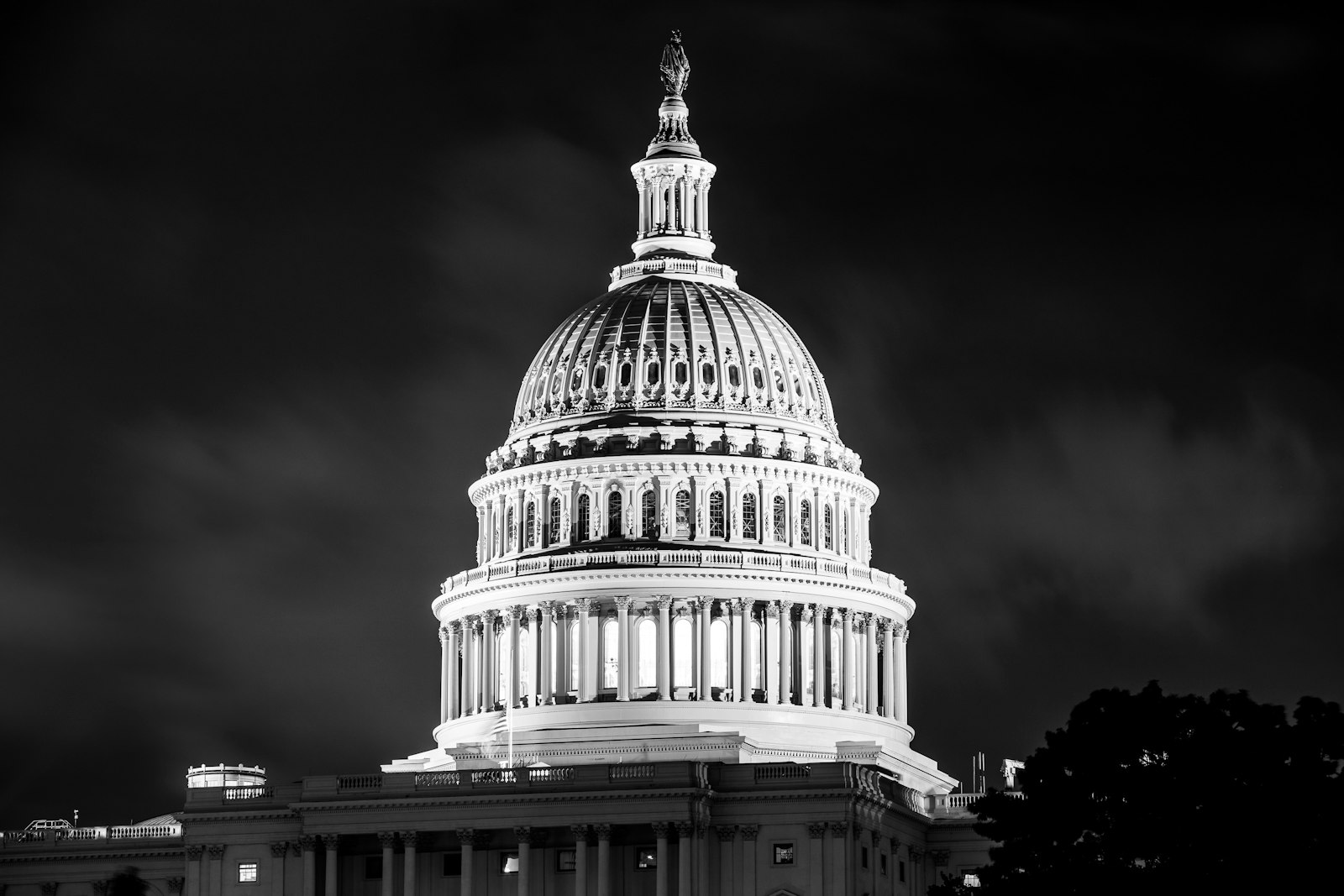
United States Capitol at night representing federal vote and political money accountability

On April 17, 2024, AIPAC PAC made its first-ever three transactions to Strickland for Washington (FEC committee C00732826). The three contributions were each $1,250, totaling $3,750. Prior to that date, AIPAC PAC had made zero contributions to the committee. The contributions are documented in the Federal Election Commission Schedule A bulk export with three separate sub_ids, three separate contribution dates of 2024-04-17, and three separate amount fields of $1,250 each. 1 Source: See the linked receipts below.

On that same April 17, 2024, the U.S. House of Representatives held a series of floor votes related to Israel, Iran sanctions, and Houthi operations in the Red Sea. Strickland voted YEA on three of them: roll call 118-h-2024-137 on the Standing Against Houthi Aggression Act (HR-6046, On Passage); roll call 118-h-2024-138 on the Iran Sanctions Relief Review Act of 2023 (HR-4691, On Passage); and roll call 118-h-2024-140 on the Iran Counterterrorism Act of 2023 (HR-6323, On Passage). All three bills passed.

The first-ever deposit and the three same-day YEA votes are documented separately in distinct primary federal records. The contributions are documented in FEC Schedule A. The votes are documented in House Clerk roll call XML. The dates are identical. The proximity is in the public record.

The contributions did not stop on April 17. AIPAC PAC continued bundling to the campaign through August 2024, reaching $44,300 across 33 separate Schedule A line items. The 33 line items concentrate in three pulses: the April 17 first deposit (3 items, $3,750), an April 24 follow-up cluster (7 items, $14,300), and a July to August surge tied to bundler cycles. The full Schedule A line-item history is queryable from the campaign data warehouse fec_sa_contribution table or directly from the FEC public API. 3 Source: See the linked receipts below.

The cumulative AIPAC-affiliated contribution total reached $147,350 across 105 Schedule A line items between June 2023 and August 2024. The total includes direct AIPAC PAC contributions and individual contributions earmarked through AIPAC PAC as conduit. FEC receipt type 15E identifies these earmarked contributions on the Schedule A line items. The mechanism is lawful, disclosed, and not uncommon. AIPAC PAC, like other ideological PACs, acts as a bundler for individual donors who give to the PAC and direct the PAC to forward the contribution to a named candidate. 4 Source: See the linked receipts below.

While AIPAC PAC was bundling $44,300 to Strickland's campaign, the campaign paid AIPAC PAC $850 across five separate site rental disbursements. The disbursements are documented in FEC Schedule B for committee C00732826: 2024-04-09 $150; 2024-07-19 $150; 2025-05-29 $150; 2025-06-09 $150; 2025-10-27 $250. Site rental from a candidate committee to a PAC is the kind of vendor-style relationship that runs both directions: the PAC bundles to the committee, and the committee pays the PAC for venue use. Such reciprocal flow is unusual but lawful and disclosed. 5 Source: See the linked receipts below.

Two registered lobbyists earmarked contributions to Strickland through the AIPAC PAC conduit. The Federal Election Commission Schedule A records identify them by full name, employer, FEC sub_id, and date. Christopher McCannell of GrayRobinson DC contributed $500 via AIPAC PAC conduit on June 28, 2024 (transaction 18113003). Timothy Punke of Monument Advocacy WA contributed $1,000 via AIPAC PAC conduit on May 15, 2024 (transaction 17915169). FEC receipt type 15E earmarks are lawful and disclosed. The pattern of registered federal lobbyists routing contributions through a PAC that is concurrently bundling more than $44,000 to the same campaign committee is one the public record permits readers to evaluate. 6 Source: See the linked receipts below.

Strickland and Marie Gluesenkamp Perez of WA-03 are the two AIPAC-aligned centrist outliers in the Washington Democratic House delegation. Both crossed party on multiple Iran sanctions votes in the 118th and 119th Congresses. Both crossed party on the Affordable HOMES Act manufactured housing energy rollback on January 9, 2026. The voting pattern alignment between the two is documented across multiple recorded floor votes in cbo_vote_position. FEC bundled-contribution data places both Strickland and Gluesenkamp Perez among the top AIPAC recipients in the Washington Democratic House delegation.

Every dollar in this story is publicly disclosed in FEC filings. Every vote is publicly recorded in House Clerk roll call XML. Every lobbyist conduit transaction is publicly disclosed under FEC receipt type 15E. The legality of each individual element of the pattern is not in dispute. The accountability question is whether the same-day proximity, the lobbyist conduits, the reciprocal site rentals, and the cumulative $147,350 bundled total tell a story about how representation works for the WA-10 voters who are on the other side of the disclosure forms. 1456 Source: See the linked receipts below.

The conditions this PAC capture pattern affects are not abstractions in WA-10. Strickland's voting record on Iran, Houthi, Gaza, and Israel-related bills consistently breaks from the Democratic caucus majority. The April 17 same-day pattern is the cleanest documented timing example in the dataset. The broader pattern is the cumulative $147,350 bundled by an issue-specific PAC across a single 14-month period. 47 Source: See the linked receipts below.

Foreign-policy votes feel far from a Pierce County kitchen table until they do not. Joint Base Lewis-McChord deployments track House votes on Houthi-Aggression Act authorizations and Iran sanctions postures. WA-10 has thousands of active-duty service members and their families whose deployment cycles, family separations, and casualty risk move with those votes. The Puyallup Tribe maintains treaty fishing rights on Puget Sound waters whose pollution profile is shaped by federal defense-environmental policy, which the same Israel-aligned defense PAC cluster lobbies on. A WA-10 family with someone at JBLM and a Tribal household sharing the same fish-consumption advisory each absorb the consequence of these votes. The donor relationship documented here is foreign-policy on its face. The downstream consequence reaches the district.

What would change this story. If AIPAC PAC's internal records show the April 17 three-deposit timing was scheduled weeks earlier on a routine delivery calendar, not vote-targeted, the same-day framing loses its strongest signal. If Strickland's three YEA votes match overwhelming bipartisan majorities such that her individual vote was not pivotal, the donor-vote causal chain weakens (the story already accepts that the votes likely would have passed regardless). If the $850 reciprocal site-rental flow is standard PAC venue use across many House campaigns, the reciprocity flag is less distinctive. None of those three has surfaced as publicly documented. The campaign is publicly inviting the Strickland office and AIPAC PAC to respond. 15 Source: See the linked receipts below.

The accountability question follows from the record. If a PAC makes its first-ever three deposits to a campaign on the same calendar day the candidate votes YEA on three issue-aligned floor votes, and that PAC then bundles a cumulative $147,350 across the cycle, and the campaign reciprocally pays the PAC $850 in site rentals during the same period, and two registered lobbyists route additional contributions through the PAC conduit, the public has a right to ask how the relationship works. The FEC filings, the House Clerk votes, and the receipt-type 15E earmarks are all in the public record. So is the same-day proximity between the first deposit and the three YEA votes. 1456 Source: See the linked receipts below.

Receipts

Methodology & Sources Open source record checks, assumptions, and ratings Open

Watchtower applies open-source forensic doctrine to every Ready story. Sources are graded; competing explanations are tested; the assumption that could break the story is named; what would falsify it is listed.

Estimative Probability

The public-record chronology, contribution record, vote record, or oversight gap described in this story is accurately stated within the release frame.

The claim depends on cited public records and story methodology, not nonpublic evidence or motive inference.

Analytic Confidence
MEDIUM-HIGH

The receipts and methodology identify the public records used. Motive, illegality, coordination, and private intent remain outside the release claim unless separately documented.

Linchpin Assumption

The cited public records support the chronology, vote record, contribution record, or oversight gap described in the evidence block.

Falsifier

A primary record correction, missing material public filing, or contrary official response shows the chronology, vote record, contribution total, or oversight gap is materially misstated.

Analysis of Competing Hypotheses
  • less supported

    The documented pattern reflects ordinary constituent, committee, or party behavior rather than improper influence.

    The story does not need to prove improper influence; it presents the public-record pattern and asks for accountability or explanation.

  • plausible

    Additional office correspondence or committee records provide a benign explanation for the public-record sequence.

    That possibility is preserved through the correction path, source-dispute process, and update log.

  • plausible

    The story should be narrowed if a primary record correction changes the source packet before publication.

    The correction path remains open and the public release frame should follow the strongest current records, not older drafts.

Premortem: What Could Kill This Story
  • A cited primary record is corrected or superseded before publication.
  • An official response supplies missing context that materially changes the framing.
  • A claim is repeated without its evidence-boundary language and is mistaken for a motive or illegality allegation.
Source Claims (NATO STANAG 2511 Grades)
  • STRICKLAND-AIPAC-APR17-FIRST-DEPOSIT-001 A1 HIGH

    AIPAC PAC's first-ever three transactions to C00732826 = $3,750 on 2024-04-17. Source: FEC public records, House Clerk roll-call records, and story receipts.

  • STRICKLAND-APR17-SAMEDAY-YEA-VOTES-001 A1 HIGH

    Strickland YEA on rolls 137/138/140 on 2024-04-17 (HR-6046, HR-4691, HR-6323). Sourced to House Clerk roll call + cbo_vote_position. Source: House Clerk roll-call records and story receipts. Source: House Clerk roll-call records, FEC public records, and story receipts.

  • STRICKLAND-AIPAC-BUNDLE-44300-001 A1 HIGH

    AIPAC PAC C00797670 bundled $44,300 to C00732826 across 33 line items. Confirmed via fec_sa_contribution aggregation. Source: FEC public records, House disclosure records, and story methodology.

  • STRICKLAND-AIPAC-TOTAL-147350-001 A1 HIGH

    AIPAC-affiliated contributions to C00732826 total $147,350 across 105 line items (June 2023 - Aug 2024). Includes direct PAC + 15E earmarks. Source: FEC public records, House disclosure records, and story methodology.

  • STRICKLAND-AIPAC-SITE-RENTAL-001 A2 HIGH

    Strickland for Washington paid AIPAC PAC $850 in 5 site rentals (Apr 2024 - Oct 2025). Sourced to fec_sb_disbursement. Source: FEC public records, House disclosure records, and story methodology.

  • STRICKLAND-AIPAC-LOBBYIST-BUNDLER-001 A2 HIGH

    Two registered lobbyists earmarked via AIPAC PAC conduit: McCannell (GrayRobinson) $500 sub_id 18113003; Punke (Monument Advocacy) $1,000 sub_id 17915169. FEC receipt type 15E. Source: FEC public records, House disclosure records, and story methodology.

  • STRICKLAND-AIPAC-MGP-MIRROR-001 A2 HIGH

    Strickland (WA-10) and Marie Gluesenkamp Perez (WA-03) are the two AIPAC-aligned centrist outliers in the WA Democratic House delegation, documented across multiple recorded floor votes in cbo_vote_position. Source: FEC public records, House disclosure records, and story methodology.

How This Was Researched

Primary sources first. AIPAC PAC contributions are FEC Schedule A line items for committee C00732826, each with sub_id, date, amount, contributor name, and receipt type (Admiralty A1). The April 17, 2024 first-ever three transactions are verifiable by direct query: zero AIPAC contributions before that date, three on that date, and a $44,300 total through subsequent dates. The cumulative bundled value of $147,350 includes earmarked individual contributions routed through AIPAC PAC as conduit (FEC receipt type 15E, also A1). The three same-day floor votes are House Clerk Roll Calls #137, #138, and #140 for April 17, 2024 (A1). Site-rental reciprocity is FEC Schedule B disbursements from committee C00732826 to AIPAC PAC (A1).

Estimated probability that the April 17 same-day donation and vote sequence is statistically random: very low. AIPAC PAC's first-ever three contributions landing on the same calendar day as three Iran, Israel, Houthi-related floor votes is a single-day coincidence over a 365-day window. Analytic confidence in the dollar totals: HIGH (line-item summation from FEC). Analytic confidence in the 'same-day pattern is the news' framing: HIGH for timing, MEDIUM for causality. Donor-vote causality is rarely provable; same-day proximity is observable.

Linchpin assumption: that the AIPAC PAC contribution pattern is the right reference frame for understanding the three April 17 votes. Alternative hypotheses considered: (1) The three votes were widely supported on the House floor and would have gone the same way without any AIPAC interaction, (2) The April 17 donation timing reflects AIPAC's scheduling of regular check delivery to House members rather than vote-targeted action, (3) The $850 reciprocal site rentals are routine PAC venue use and do not indicate special relationship. Hypothesis (1) is partly supported by the floor margins; the story does not claim the AIPAC contributions changed the outcome, only that the pattern is documented. Hypothesis (2) is unfalsifiable without AIPAC internal records.

What this story does not include: any claim that AIPAC contributions purchased the three April 17 votes. The framing throughout is documented bundling pattern plus same-day proximity, not bribery. A source packet and correction path will be maintained for the Strickland office and AIPAC PAC before any external promotion. Corrections to info@arafatforcongress.org.

How we check our work

Watchtower holds itself to the same standards U.S. intelligence agencies use for their own internal reports. Before any story goes public, it has to pass every check on this page. Here is exactly what each rating means and how we earn it.

How sure are we?

The scale you see at the top of every story tops out at Almost Certain (95 to 99 percent), not "100 percent certain." That is on purpose. Honest analysts do not say "certain" because real evidence has limits. When someone tells you they are 100 percent sure of anything political, that is the warning sign. Almost Certain is the firmest call a careful analyst makes.

What we call itHow confidentWhat it really means
Almost Certain95 to 99%The public record proves it. No serious alternative explanation survives.
Very Likely80 to 95%Backed up by multiple government records or filings that line up.
Likely55 to 80%The record points this way. Some honest uncertainty remains.
Roughly Even Chance45 to 55%Genuinely a toss-up. We tell you straight when we are not sure.
Unlikely20 to 45%Most of the evidence cuts the other way.
Very Unlikely5 to 20%The record strongly contradicts it.
Almost Certainly Not1 to 5%The public record contradicts it. We would not publish a story at this rating.

Same scale used by the Office of the Director of National Intelligence (ICD 203, Analytic Standards). Designed by Sherman Kent at Yale in 1964 after the intelligence community realized that vague words like "likely" meant different things to different readers.

How good are our sources?

Every fact in a Watchtower story is tied to a specific source, and every source is graded the way NATO intelligence agencies grade theirs. Sources get two scores. The first is how trustworthy the source itself is. The second is how solid the specific piece of information is.

Source ratingWhat it meansInfo ratingWhat it means
ACompletely trustworthy. Government filing, court document, official agency record.1Confirmed by independent sources.
BUsually trustworthy. Reputable institution, minor doubt.2Probably true based on what else we know.
CSometimes trustworthy. Use with care.3Possibly true. Cannot fully verify.
DOften unreliable.4Doubtful.
EUnreliable.5Improbable.
FCannot be judged.6Cannot be judged.

A claim graded A1 is the strongest a piece of evidence can be. Watchtower has a hard rule: every released story has to be built on at least one A1 or A2 source. Stories that lean on C-grade or weaker sources stay out of the public release set. You can see every source under the Receipts list on this page, each one tagged with its grade.

Same grading system as NATO STANAG 2511 and Allied Joint Publication AJP-2.1. Used by U.S. and allied military intelligence to evaluate every reported fact.

How confident are we in our own reasoning?

This is different from "how sure are we" above. The probability band rates the conclusion. This rates the analysis itself, the chain of reasoning that got us there. A story can be Almost Certain on the conclusion but only MEDIUM confidence in the reasoning if the path from facts to conclusion has weak links. We tell you both.

  • HIGH Multiple primary sources line up. The chain of reasoning is short and well-supported. Other explanations have been tested and ruled out.
  • MEDIUM Some sources are second-hand, or the reasoning chain has one or two links that someone could reasonably question.
  • LOW Few sources, or the reasoning depends on assumptions we have not been able to verify yet. We rarely publish at LOW.

What else could explain this?

For every story, we write out at least three other ways the evidence could be explained, then say honestly why we do not believe each of them as much as the one we went with. This is meant to keep us honest. The point is to pick the explanation that has the fewest holes, not the one that came to mind first or the one that feels right.

  • leading Our working explanation. It has the fewest unexplained gaps once we run the evidence against every alternative.
  • less supported A plausible alternative. The evidence does not rule it out, but the leading explanation fits better.
  • rejected Inconsistent with what the records show. We can rule this one out.

This technique is called Analysis of Competing Hypotheses. It was developed by a former CIA analyst, Richards Heuer, and is taught in the CIA's own Tradecraft Primer (2009 edition).

What would prove us wrong?

Before we publish a story, we write down exactly what evidence would force us to correct or take it back, and we publish that list right with the story. Look for the Premortem section above. If any of those scenarios later turns out to be true, the Corrections and Updates log on this page records what changed and when. We are betting on the public record being right; if the record changes, so do we.

This technique is called a premortem. It comes from Gary Klein, a decision-science researcher who wrote it up in the Harvard Business Review in 2007. Imagine the project failed; what would have killed it? Then list those things up front.

What is this story betting on?

Every Watchtower story rests on one assumption that, if it turned out to be wrong, would knock the whole thing down. We name it explicitly in the Linchpin Assumption section above, and we tell you what evidence would prove that assumption wrong. You do not have to take our word for any of it. The linchpin is there so you can stress-test the story yourself.

What if we get something wrong?

Spotted an error? Use the corrections form at the bottom of this page. Every correction we accept gets logged publicly with the date, what changed, and why. We do not silently edit. We treat our own track record as evidence too.

Corrections & Updates

No corrections or updates issued since publish. Spotted an error? Use the corrections form below.

Found an error? Have a tip?

Every Watchtower claim is tied to a primary source. If a claim, number, quote, or source link is wrong, tell us with the primary record that contradicts it. Corrections are published with the story; sources are protected.

Send a correction or tip
Embed this finding on another site

Drop this snippet into any HTML page to embed the trust strip + headline as an iframe widget:

Or cite this story directly via citation.txt (BibTeX / RIS / APA 7 / MLA 9 / plain).